A balanced review of Reiki, hands-on healing research, clinical outcomes, placebo controls, subtle-energy claims, and responsible complementary use.
Two questions that should not be confused
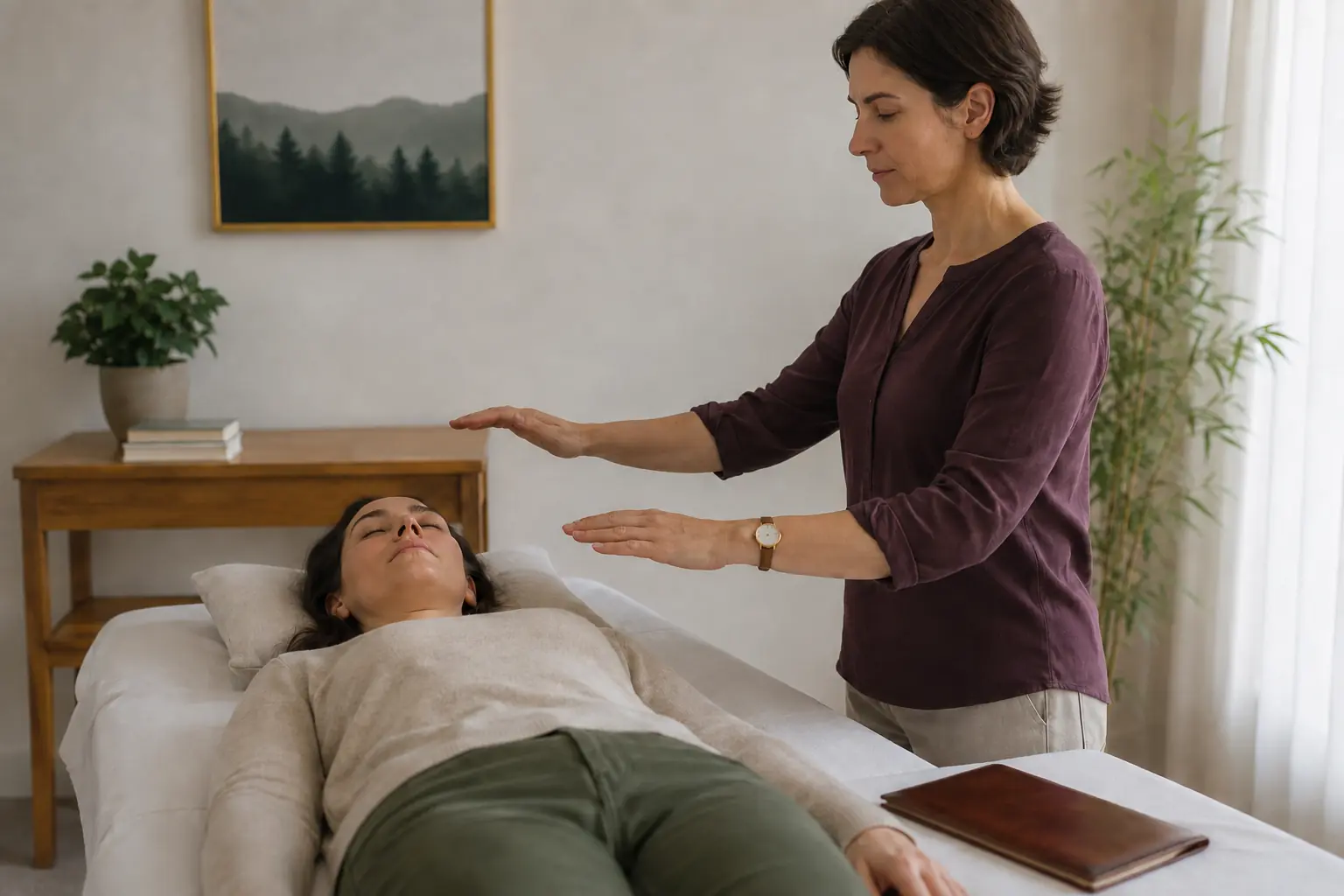
When someone asks whether Reiki works, at least two different questions are hidden inside the sentence. The first is clinical: after a Reiki session, do some people report changes in anxiety, pain, fatigue, relaxation, or quality of life? The second is mechanistic: have researchers demonstrated a distinct, measurable subtle energy transmitted by the practitioner and responsible for those changes? A study can offer information about the first question without settling the second.
This distinction is not a rhetorical escape. Medicine regularly separates outcomes from mechanisms while evidence develops. It also prevents a common exaggeration in complementary-health discussions: treating every statistically significant improvement as proof of the traditional explanation. Respect for Reiki does not require claiming that science has confirmed more than it has.
What a Reiki session contains
Reiki emerged in early twentieth-century Japan through Mikao Usui and later lineages. Contemporary sessions often include a quiet environment, structured attention, hands placed gently on or near the body, intentional breathing, expectations of care, and a period in which the recipient does not have to perform. Each element may participate in the experience.
Practitioners describe ki or universal life energy, while biomedical research generally measures observable outcomes rather than ki itself. Touch, context, therapeutic relationship, expectancy, rest, and autonomic regulation are plausible contributors to reported wellbeing. These factors do not make an experience fake. They simply mean that a complex ritual cannot be reduced to one unverified mechanism without adequate controls.

Promising findings and recurring limitations
Systematic reviews and recent trials have reported possible benefits for anxiety, pain, fatigue, stress, and quality of life in some populations. The direction is interesting, particularly when Reiki is used as an adjunct to standard care. Yet reviews repeatedly note small samples, inconsistent protocols, varied comparison groups, short follow-up, risk of bias, and difficulty blinding both practitioners and participants.
Sham-Reiki controls can improve study design by comparing sessions with similar time, position, and attention. Even then, blinding can be incomplete, and practitioner behavior may vary. Heterogeneous studies should not be treated as one uniform body of evidence. A positive pooled result can justify better research without establishing a universal treatment effect.
What about subtle energy?
Physics uses the word energy in precise, measurable ways. Spiritual traditions often use it experientially or metaphysically. The same word does not make the concepts identical. At present, major evidence-based health agencies do not recognize convincing scientific evidence for the energy field proposed as Reiki's mechanism.
Attempts to detect human energy fields have not produced a measurement method with the reliability, specificity, and independent replication required for scientific acceptance. Future research is possible, but a responsible statement today is modest: some clinical outcomes deserve investigation; a unique subtle-energy transmission has not been established. This protects Reiki from the fragile strategy of borrowing physics vocabulary that the data cannot support.
How to use Reiki responsibly
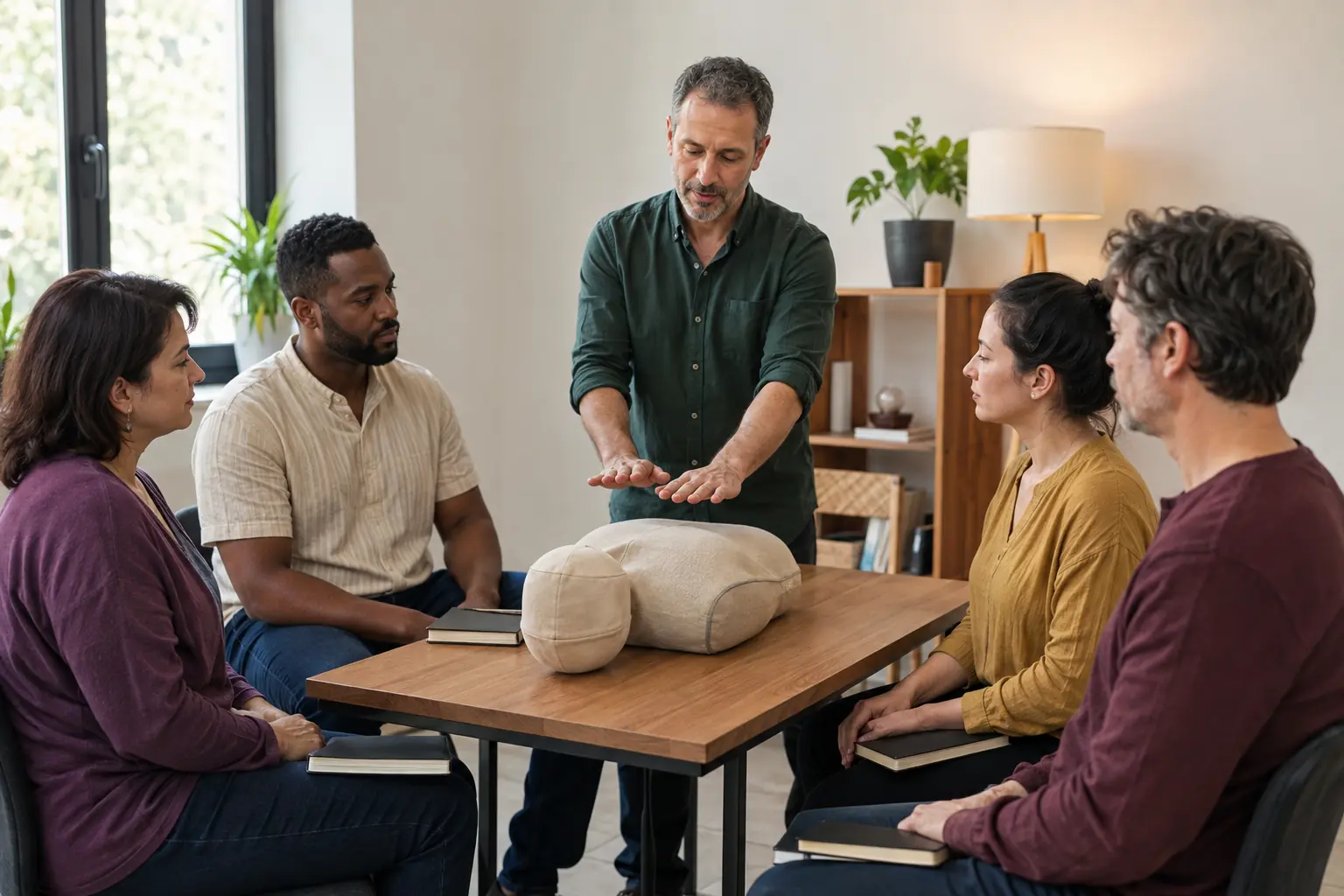
Reiki may be offered as a complementary wellbeing practice when clients receive clear information, consent to touch or no-touch options, and understand that results vary. It should never delay urgent assessment, replace medication or evidence-based treatment, or be used to claim that illness was caused by a person's spiritual failure.
Practitioners can strengthen credibility by documenting training, maintaining hygiene and boundaries, avoiding diagnostic language, referring when needed, and describing research accurately. A person can value the calm, ritual, or meaning of a session without converting that experience into a universal biological conclusion. Scientific humility and spiritual depth are not enemies.